
Numbers 19
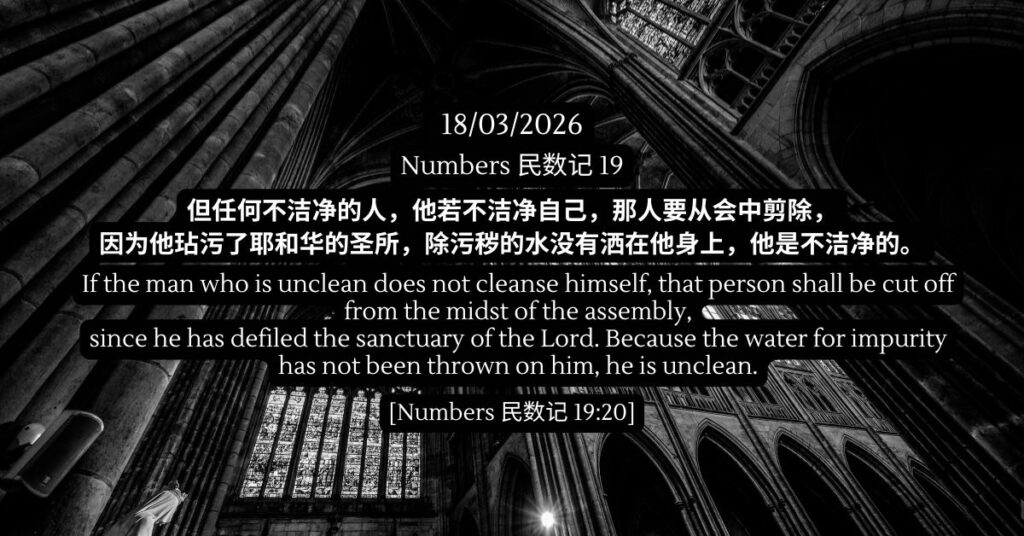
If the man who is unclean does not cleanse himself, that person shall be cut off from the midst of the assembly, since he has defiled the sanctuary of the Lord. Because the water for impurity has not been thrown on him, he is unclean. – Numbers 19:20
Click to read passage
Numbers 16–19 record a painful season in Israel’s wilderness journey. Again and again, the people rebelled against the leadership God had established through Moses and Aaron. Korah and his followers challenged God’s order and were swallowed by the earth. The congregation grumbled, and a deadly plague followed. Yet even after witnessing such judgment, the spirit of rebellion did not disappear.
This context explains why Numbers 19 introduces the ritual of the red heifer and the water of cleansing. The ashes of a sacrificed red heifer were preserved and mixed with fresh water. This water was sprinkled on anyone who had become ceremonially unclean through contact with death, restoring them to the community.
Though the law may seem strange to modern readers, it teaches an important truth: defilement is serious, and cleansing is necessary. Contact with a corpse made someone unclean for seven days. This rule served as a vivid picture of sin’s contaminating power. Sin does not stay contained. It spreads.
The law showed that defilement could not be ignored. Anyone who refused purification became a danger to the community and had to be cut off from the camp (Num 19:20). In the same way, sin damages not only individuals but also relationships and communities. Even today, we see its effects in broken relationships, addictions, and the corruption of the mind that harms families and society.
We see how even after severe judgment, the Israelites continued to grumble. This stubbornness mirrors our own hearts. Sin often grows quietly within us—pride, resentment, self-will, or unbelief.
It is a bit like what happens in a garden during springtime. When the weather warms and the rain comes, weeds begin to appear. A gardener may carefully remove them, clearing the soil until the ground looks clean. But only days later, new weeds push their way through the earth again. Anyone who tends a garden knows this truth: weeds must be removed again and again. Sin behaves similarly. The seeds of rebellion remain in the soil of our hearts. Without constant vigilance, they grow back.
In Numbers 19, cleansing required the sacrifice of a valuable animal—a red heifer without defect that had never been under a yoke. Its life was given so that the defiled could be restored. The ashes were later mixed with “living water” and sprinkled for purification. This ritual pointed forward to something greater.
The New Testament teaches that these ashes provided only outward cleansing, but they also foreshadowed Christ’s sacrifice. Jesus, the spotless Son of God, was sacrificed outside the city—just as the heifer was slain outside the camp. His death happened once in history, yet its cleansing power continues today.
Numbers 19 reminds us that God did not leave His people in their defilement. He provided a way for cleansing. In Christ, that provision becomes complete. While the Israelites were cleansed outwardly, Christ cleanses inwardly, removing our guilt and purifying our conscience. (Hebrews 9:13-14)
Therefore, we come to Christ again and again. Daily confession and repentance remind us of our constant need for His grace. The good news is this: the cleansing Christ provides is always available. Nothing prevents it except pride, stubborn unbelief, or refusal to come to Him.
Reflection:
1. What “weeds” of sin tend to grow repeatedly in your heart or life?
2. How can you cultivate a habit of daily spiritual cleansing through repentance and dependence on Christ?
Prayer:
Dear Father God, You are holy and pure, and yet You graciously provide cleansing for sinners like us. We confess that the seeds of rebellion still grow in our hearts. Pride, self-will, and unbelief often take root again and again. Thank You for the sacrifice of Jesus, whose blood cleanses us from all sin. Help us to come to You daily in humility, receiving Your forgiveness and grace. Remove the weeds of sin from our lives, and shape us into people who live in holiness and gratitude before You. In Jesus’ name we pray, Amen.
Click to read passage
Numbers 16–19 record a painful season in Israel’s wilderness journey. Again and again, the people rebelled against the leadership God had established through Moses and Aaron. Korah and his followers challenged God’s order and were swallowed by the earth. The congregation grumbled, and a deadly plague followed. Yet even after witnessing such judgment, the spirit of rebellion did not disappear.
This context explains why Numbers 19 introduces the ritual of the red heifer and the water of cleansing. The ashes of a sacrificed red heifer were preserved and mixed with fresh water. This water was sprinkled on anyone who had become ceremonially unclean through contact with death, restoring them to the community.
Though the law may seem strange to modern readers, it teaches an important truth: defilement is serious, and cleansing is necessary. Contact with a corpse made someone unclean for seven days. This rule served as a vivid picture of sin’s contaminating power. Sin does not stay contained. It spreads.
The law showed that defilement could not be ignored. Anyone who refused purification became a danger to the community and had to be cut off from the camp (Num 19:20). In the same way, sin damages not only individuals but also relationships and communities. Even today, we see its effects in broken relationships, addictions, and the corruption of the mind that harms families and society.
We see how even after severe judgment, the Israelites continued to grumble. This stubbornness mirrors our own hearts. Sin often grows quietly within us—pride, resentment, self-will, or unbelief.
It is a bit like what happens in a garden during springtime. When the weather warms and the rain comes, weeds begin to appear. A gardener may carefully remove them, clearing the soil until the ground looks clean. But only days later, new weeds push their way through the earth again. Anyone who tends a garden knows this truth: weeds must be removed again and again. Sin behaves similarly. The seeds of rebellion remain in the soil of our hearts. Without constant vigilance, they grow back.
In Numbers 19, cleansing required the sacrifice of a valuable animal—a red heifer without defect that had never been under a yoke. Its life was given so that the defiled could be restored. The ashes were later mixed with “living water” and sprinkled for purification. This ritual pointed forward to something greater.
The New Testament teaches that these ashes provided only outward cleansing, but they also foreshadowed Christ’s sacrifice. Jesus, the spotless Son of God, was sacrificed outside the city—just as the heifer was slain outside the camp. His death happened once in history, yet its cleansing power continues today.
Numbers 19 reminds us that God did not leave His people in their defilement. He provided a way for cleansing. In Christ, that provision becomes complete. While the Israelites were cleansed outwardly, Christ cleanses inwardly, removing our guilt and purifying our conscience. (Hebrews 9:13-14)
Therefore, we come to Christ again and again. Daily confession and repentance remind us of our constant need for His grace. The good news is this: the cleansing Christ provides is always available. Nothing prevents it except pride, stubborn unbelief, or refusal to come to Him.
Reflection:
1. What “weeds” of sin tend to grow repeatedly in your heart or life?
2. How can you cultivate a habit of daily spiritual cleansing through repentance and dependence on Christ?
Prayer:
Dear Father God, You are holy and pure, and yet You graciously provide cleansing for sinners like us. We confess that the seeds of rebellion still grow in our hearts. Pride, self-will, and unbelief often take root again and again. Thank You for the sacrifice of Jesus, whose blood cleanses us from all sin. Help us to come to You daily in humility, receiving Your forgiveness and grace. Remove the weeds of sin from our lives, and shape us into people who live in holiness and gratitude before You. In Jesus’ name we pray, Amen.