
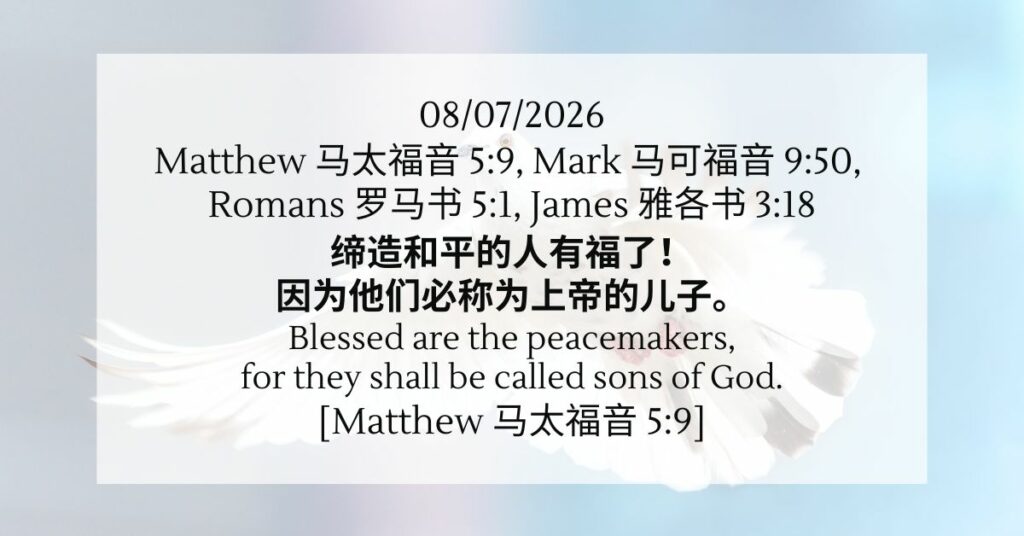
Matthew 5:9, Mark 9:50, Romans 5:1, James 3:18
Blessed are the peacemakers, for they shall be called sonsof God. – Matthew 5:9
Click to read passage
We all long for peace. We see its absence in wars between nations, but we also experience it much closer to home—in broken marriages, strained friendships, workplace tensions, church disagreements, and family conflicts. The world often speaks of peace, yet genuine reconciliation remains painfully rare.
Against this backdrop, Jesus’ words in the Sermon on the Mount are both surprising and challenging: “Blessed are the peacemakers, for they shall be called sons of God.” (Matt. 5:9). Biblical peace is not passive avoidance of conflict; it is the active pursuit of reconciliation.
This calling flows naturally from the previous Beatitude: “Blessed are the pure in heart.” One of the most common causes of conflict is hidden motives, pride, and deceit. By contrast, a pure heart is marked by sincerity, openness and humility, creating the foundation for genuine reconciliation. James echoes this truth: “And a harvest of righteousness is sown in peace by those who make peace.” (James 3:18). Peace grows where hearts are humble, honest, and willing to do what is right.
Yet peacemaking is never easy because true peace is costly. Paul reminds us, “Therefore, since we have been justified by faith, we have peace with God through our Lord Jesus Christ.” (Rom. 5:1). Our peace with God was not achieved by overlooking sin or pretending it did not exist. It was purchased through Christ’s sacrifice on the cross. God took the initiative to reconcile us to Himself, paying the highest price so that we might be restored to Him.
If that is how God made peace with us, we should not expect peacemaking to be painless. Sometimes the cost is admitting we were wrong and asking for forgiveness. At other times, it means lovingly confronting sin rather than ignoring it, or patiently listening to both sides of a disagreement before seeking reconciliation. Peacemakers are willing to endure the discomfort of difficult conversations because they value restored relationships over personal convenience.
This also reminds us that peace is not the same as compromise. There is such a thing as “cheap peace”—a superficial harmony that ignores truth, repentance, or justice. Jesus never sacrificed truth for the appearance of unity. Likewise, genuine peace does not avoid difficult issues but seeks restoration through truth, repentance, and forgiveness.
Jesus also told His disciples, “Have salt in yourselves, and be at peace with one another.” (Mark 9:50b). As followers of Christ, we have first received peace with God. Now we are called to become instruments of His peace in our homes, churches, workplaces, and communities. Every time we choose reconciliation over resentment, forgiveness over revenge, and truth spoken in love over fearful silence, we reflect the heart of our heavenly Father. In doing so, others catch a glimpse of His kingdom through us.
Reflection:
• Is there a relationship in my life where I have been avoiding necessary reconciliation?
• What practical step can I take today to become a peacemaker who reflects the heart of Christ?
Prayer:
Dear Heavenly Father, thank You for making peace with me through the sacrifice of Your Son, Jesus Christ. Thank You that while I was still Your enemy, You took the initiative to reconcile me to Yourself. Forgive me for the times I have chosen pride, bitterness, or avoidance instead of pursuing peace. Give me a pure heart, the courage to speak the truth in love, the humility to seek forgiveness when I have failed, and the wisdom to help restore broken relationships. Make me a faithful peacemaker who reflects Your character and points others to the peace that is found in Christ alone. In Jesus’ name, Amen.
Click to read passage
We all long for peace. We see its absence in wars between nations, but we also experience it much closer to home—in broken marriages, strained friendships, workplace tensions, church disagreements, and family conflicts. The world often speaks of peace, yet genuine reconciliation remains painfully rare.
Against this backdrop, Jesus’ words in the Sermon on the Mount are both surprising and challenging: “Blessed are the peacemakers, for they shall be called sons of God.” (Matt. 5:9). Biblical peace is not passive avoidance of conflict; it is the active pursuit of reconciliation.
This calling flows naturally from the previous Beatitude: “Blessed are the pure in heart.” One of the most common causes of conflict is hidden motives, pride, and deceit. By contrast, a pure heart is marked by sincerity, openness and humility, creating the foundation for genuine reconciliation. James echoes this truth: “And a harvest of righteousness is sown in peace by those who make peace.” (James 3:18). Peace grows where hearts are humble, honest, and willing to do what is right.
Yet peacemaking is never easy because true peace is costly. Paul reminds us, “Therefore, since we have been justified by faith, we have peace with God through our Lord Jesus Christ.” (Rom. 5:1). Our peace with God was not achieved by overlooking sin or pretending it did not exist. It was purchased through Christ’s sacrifice on the cross. God took the initiative to reconcile us to Himself, paying the highest price so that we might be restored to Him.
If that is how God made peace with us, we should not expect peacemaking to be painless. Sometimes the cost is admitting we were wrong and asking for forgiveness. At other times, it means lovingly confronting sin rather than ignoring it, or patiently listening to both sides of a disagreement before seeking reconciliation. Peacemakers are willing to endure the discomfort of difficult conversations because they value restored relationships over personal convenience.
This also reminds us that peace is not the same as compromise. There is such a thing as “cheap peace”—a superficial harmony that ignores truth, repentance, or justice. Jesus never sacrificed truth for the appearance of unity. Likewise, genuine peace does not avoid difficult issues but seeks restoration through truth, repentance, and forgiveness.
Jesus also told His disciples, “Have salt in yourselves, and be at peace with one another.” (Mark 9:50b). As followers of Christ, we have first received peace with God. Now we are called to become instruments of His peace in our homes, churches, workplaces, and communities. Every time we choose reconciliation over resentment, forgiveness over revenge, and truth spoken in love over fearful silence, we reflect the heart of our heavenly Father. In doing so, others catch a glimpse of His kingdom through us.
Reflection:
• Is there a relationship in my life where I have been avoiding necessary reconciliation?
• What practical step can I take today to become a peacemaker who reflects the heart of Christ?
Prayer:
Dear Heavenly Father, thank You for making peace with me through the sacrifice of Your Son, Jesus Christ. Thank You that while I was still Your enemy, You took the initiative to reconcile me to Yourself. Forgive me for the times I have chosen pride, bitterness, or avoidance instead of pursuing peace. Give me a pure heart, the courage to speak the truth in love, the humility to seek forgiveness when I have failed, and the wisdom to help restore broken relationships. Make me a faithful peacemaker who reflects Your character and points others to the peace that is found in Christ alone. In Jesus’ name, Amen.