
Numbers 21
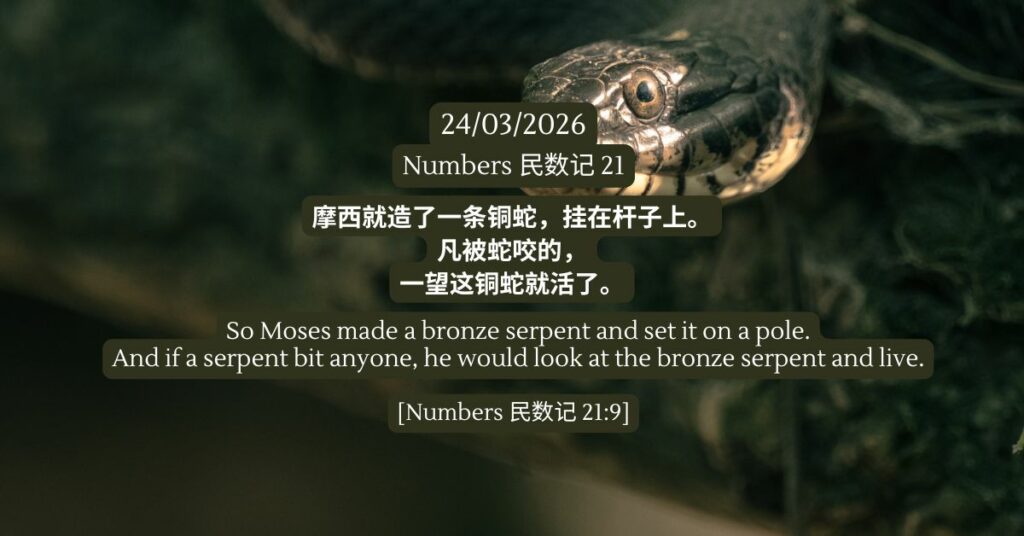
So Moses made a bronze serpent and set it on a pole. And if a serpent bit anyone, he would look at the bronze serpent and live. – Numbers 21:9
Click to read passage
Numbers 20-21 takes place near the end of Israel’s wilderness journey. As Moses, Aaron, and Miriam, the leaders who brought Israel out of Egypt, approach the end of their lives, it marks the passing of the older generation. Meanwhile, a new generation, shaped and matured through forty years in the wilderness, is now rising. This generation, refined through hardship, is being prepared to enter and possess the Promised Land.
In Numbers 21:1-3, we read about their first battle as they advance toward Canaan. The king of Arad came out to fight against them. In response, the Israelites made a vow to the LORD: “If You will indeed deliver these people into our hands, we will completely destroy their cities.” The LORD answered their prayer and gave them victory. They named the place Hormah, meaning “destruction.” This victory was both God’s affirmation of the new generation and a reminder that His presence remained with them.
Yet along the journey, this new generation also faced testing. When the Edomites refused to let them pass through their land, the Israelites had to take a longer and more difficult route. The hardship made them impatient, and they began to complain again. As before, God did not allow sin to spread unchecked among them. He sent venomous snakes among the people, and many died.
This time, however, the people responded differently. They quickly turned back to the LORD, confessed their sin, and asked Moses to intercede for them. In response to their repentance and Moses’ intercession, God provided a way of salvation. He instructed Moses: “Make a snake and put it up on a pole; anyone who is bitten can look at it and live.”
Moses made a bronze snake and lifted it up. Whoever looked at it was healed (Numbers 21:8-9). The bronze serpent symbolised the end of judgment, yet healing required an act of faith, looking up in trust. In Scripture, the serpent often represents sin, and being lifted up points to judgment and curse.
During this season of Lent, this passage echoes the words of Jesus: “Just as Moses lifted up the snake in the wilderness, so the Son of Man must be lifted up” (John 3:14).
It was not the bronze snake itself that had power, but God’s mercy in providing a way of salvation. In the same way, this points forward to Jesus Christ. On the cross, He bore the sins of all humanity and redeemed us from the bondage of sin. Three days later, through His resurrection, He brings us new life. Today, all who are willing to acknowledge their sin, look to Jesus, and seek His forgiveness can receive new life through Him.
Numbers 21:10-35 goes on to show that this redeemed and forgiven people, now empowered by God’s presence, moved forward with renewed faith and hope. They were willing to become the LORD’s army, partnering with Him to enter and take possession of the land.
Reflection:
What about us? Are we walking in our spiritual journey with the anointing and strength that Christ has given us? When we are confronted by sin, weakness, or fear, do we look to Christ, or do we fall back into complaint? In our daily lives, are we lifting up Christ, or are we lifting up ourselves? Can others see the grace of the cross through our lives?
Prayer:
Dear Lord Jesus, help me to continually turn back to You. Though the spiritual journey is not always smooth, it is a journey of victory in You. Teach me not to avoid my weaknesses or limitations, but to keep returning to Your grace, that my whole life – body, mind, and spirit, may be renewed in You. In Jesus’ victorious name I pray, Amen.
Click to read passage
Numbers 20-21 takes place near the end of Israel’s wilderness journey. As Moses, Aaron, and Miriam, the leaders who brought Israel out of Egypt, approach the end of their lives, it marks the passing of the older generation. Meanwhile, a new generation, shaped and matured through forty years in the wilderness, is now rising. This generation, refined through hardship, is being prepared to enter and possess the Promised Land.
In Numbers 21:1-3, we read about their first battle as they advance toward Canaan. The king of Arad came out to fight against them. In response, the Israelites made a vow to the LORD: “If You will indeed deliver these people into our hands, we will completely destroy their cities.” The LORD answered their prayer and gave them victory. They named the place Hormah, meaning “destruction.” This victory was both God’s affirmation of the new generation and a reminder that His presence remained with them.
Yet along the journey, this new generation also faced testing. When the Edomites refused to let them pass through their land, the Israelites had to take a longer and more difficult route. The hardship made them impatient, and they began to complain again. As before, God did not allow sin to spread unchecked among them. He sent venomous snakes among the people, and many died.
This time, however, the people responded differently. They quickly turned back to the LORD, confessed their sin, and asked Moses to intercede for them. In response to their repentance and Moses’ intercession, God provided a way of salvation. He instructed Moses: “Make a snake and put it up on a pole; anyone who is bitten can look at it and live.”
Moses made a bronze snake and lifted it up. Whoever looked at it was healed (Numbers 21:8-9). The bronze serpent symbolised the end of judgment, yet healing required an act of faith, looking up in trust. In Scripture, the serpent often represents sin, and being lifted up points to judgment and curse.
During this season of Lent, this passage echoes the words of Jesus: “Just as Moses lifted up the snake in the wilderness, so the Son of Man must be lifted up” (John 3:14).
It was not the bronze snake itself that had power, but God’s mercy in providing a way of salvation. In the same way, this points forward to Jesus Christ. On the cross, He bore the sins of all humanity and redeemed us from the bondage of sin. Three days later, through His resurrection, He brings us new life. Today, all who are willing to acknowledge their sin, look to Jesus, and seek His forgiveness can receive new life through Him.
Numbers 21:10-35 goes on to show that this redeemed and forgiven people, now empowered by God’s presence, moved forward with renewed faith and hope. They were willing to become the LORD’s army, partnering with Him to enter and take possession of the land.
Reflection:
What about us? Are we walking in our spiritual journey with the anointing and strength that Christ has given us? When we are confronted by sin, weakness, or fear, do we look to Christ, or do we fall back into complaint? In our daily lives, are we lifting up Christ, or are we lifting up ourselves? Can others see the grace of the cross through our lives?
Prayer:
Dear Lord Jesus, help me to continually turn back to You. Though the spiritual journey is not always smooth, it is a journey of victory in You. Teach me not to avoid my weaknesses or limitations, but to keep returning to Your grace, that my whole life – body, mind, and spirit, may be renewed in You. In Jesus’ victorious name I pray, Amen.